Go-live is not the end of an implementation. The first weeks of live use are when real volumes, real customers and real deadlines test everything that was built. Hypercare is the period of close, intensive support that carries the business through this stage until the system settles.
A clear hypercare plan stops small problems from becoming lasting bad habits.
How long should hypercare last?
Long enough to cover at least one full month-end close, since that is the first time all the accounting pieces are tested together. Agree the length in advance, along with what "stable" means, so everyone knows when hypercare ends and normal support begins.
The daily routine
Morning check-in
A short meeting, often fifteen minutes, with the project lead and key users from each department. Three questions:
- What went wrong yesterday?
- What is blocking anyone today?
- What was fixed and needs to be communicated?
Walking the floor
Spend time where the work happens: the stores, the sales desk, the accounts office. Many users will not report a problem; they will quietly work around it. You only find these by watching.
End of day review
Update the issue log, decide priorities for tomorrow and send a brief note to users about fixes and reminders.
Daily checks that catch problems early
Run a few simple checks every day in the first weeks:
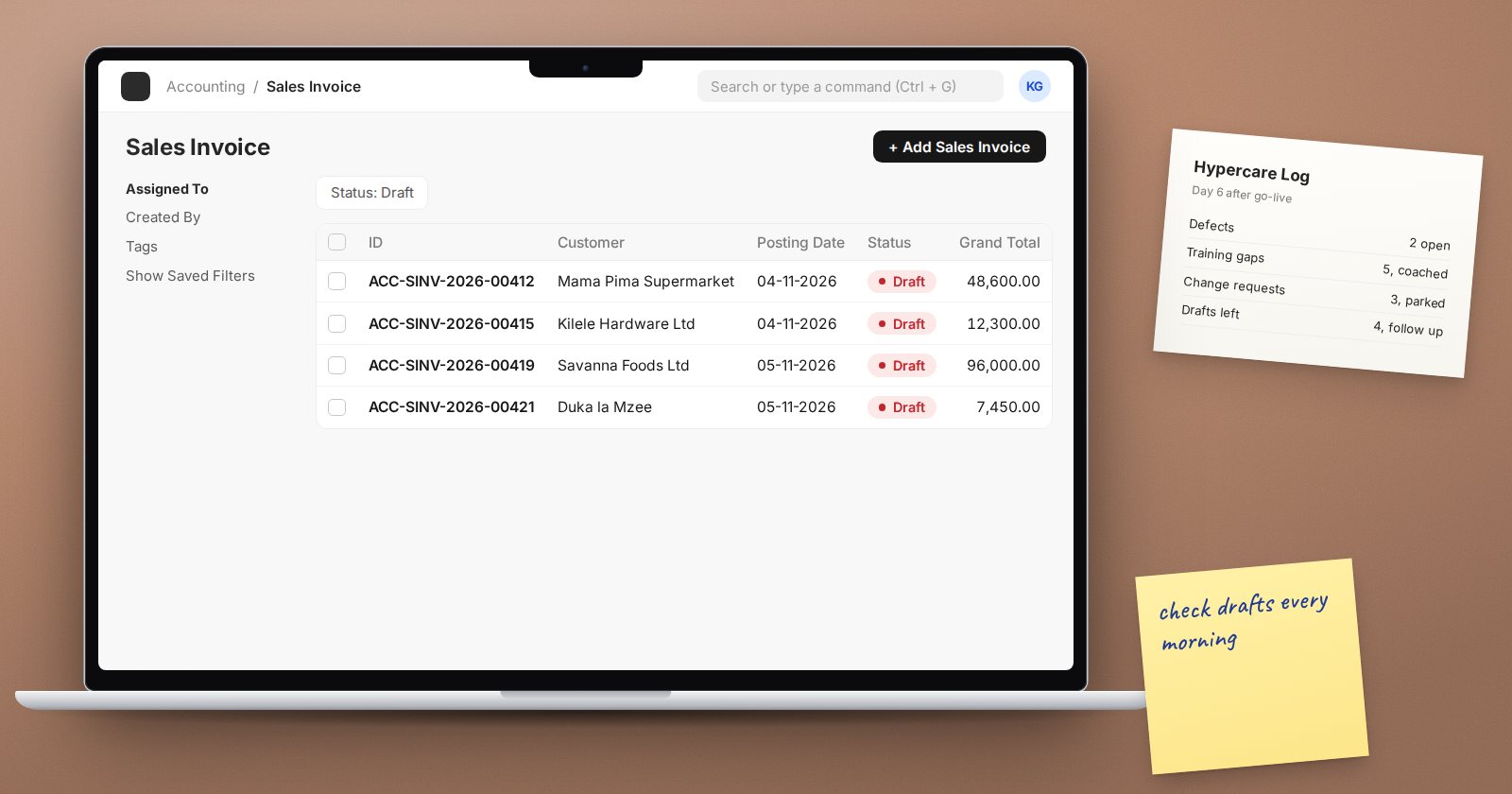
- Draft documents left behind. Filter list views for drafts. Invoices or receipts sitting in draft often mean a user is unsure or stuck.
- Stock against the ledger. The Stock and Account Value Comparison report shows where stock value and the accounts disagree.
- Receivables. Review the Accounts Receivable report for unexpected balances, which may signal payments allocated to the wrong invoice or customer.
- Wrong accounts. Scan the General Ledger for postings to suspense, miscellaneous or default accounts that should be rare.
- Duplicates. Look at new customers, suppliers and items created since go-live.
- System errors. Check the Error Log for repeated failures, for example from scheduled jobs or integrations.
Managing the issue log
Every problem goes into one log, however small. For each one record what happened, who reported it, the impact, the owner and the status.
Sort issues into three types:
- Defects. Something is configured wrongly. Fix it and confirm with the user.
- Training gaps. The system is right but the user does not know how. Fix it by coaching, and update the role guide.
- Change requests. A new need. Record it for later unless it blocks daily work.
In practice, training gaps tend to be the largest group in the early days. That is normal, and it is why hypercare is as much about teaching as fixing.
The first month-end
Plan the first close as a project in itself. Sit with the finance team through bank reconciliation, review of receivables and payables, stock valuation checks and any accruals. Expect it to take longer than future months. Write down each step that caused confusion; these become the month-end procedure.
Ending hypercare
Hypercare ends when the agreed criteria are met, for example:
- No open issues that block daily work
- First month-end closed and reviewed
- Key users handling routine questions on their own
- Support contacts and response times agreed for normal operations
Hand over the issue log, the configuration log and the role guides to whoever provides ongoing support.
Checklist
- Hypercare length and exit criteria agreed before go-live
- Daily check-in scheduled with key users
- Daily checks on drafts, stock, receivables, accounts, duplicates and errors
- One issue log, sorted by type
- First month-end supported in person
- Formal handover to normal support
Running a clean month-end after go-live is the focus of Accounting Professional, and hypercare planning is covered in the ERPNext Implementation Consultant course.